

1- Introduction
If you’ve ever built a model or dashboard and thought, “Why are my results weird?”, there’s a good chance the real culprit isn’t your algorithm—it’s your data. In real-world data science, data cleaning is the unglamorous step that makes everything else possible. Even small issues like inconsistent labels (“Apples” vs “apples”), missing values (NA, NULL, blanks), or impossible entries (negative hours in an app) can quietly ruin your analysis, inflate metrics, and push teams toward the wrong decisions.
That’s why I’m sharing a practical resource you can keep on hand: the “Data Cleaning” PDF guide created for The Artists of Data Science. It frames data cleaning as a repeatable workflow and breaks down the most common “data dirt” you’ll face—along with clear ways to scrub it away.
In this post, I’ll walk you through what’s inside the document, what you’ll learn, and why it’s worth downloading if you care about accurate insights, trustworthy models, and faster analysis.
2- OverView of The Document
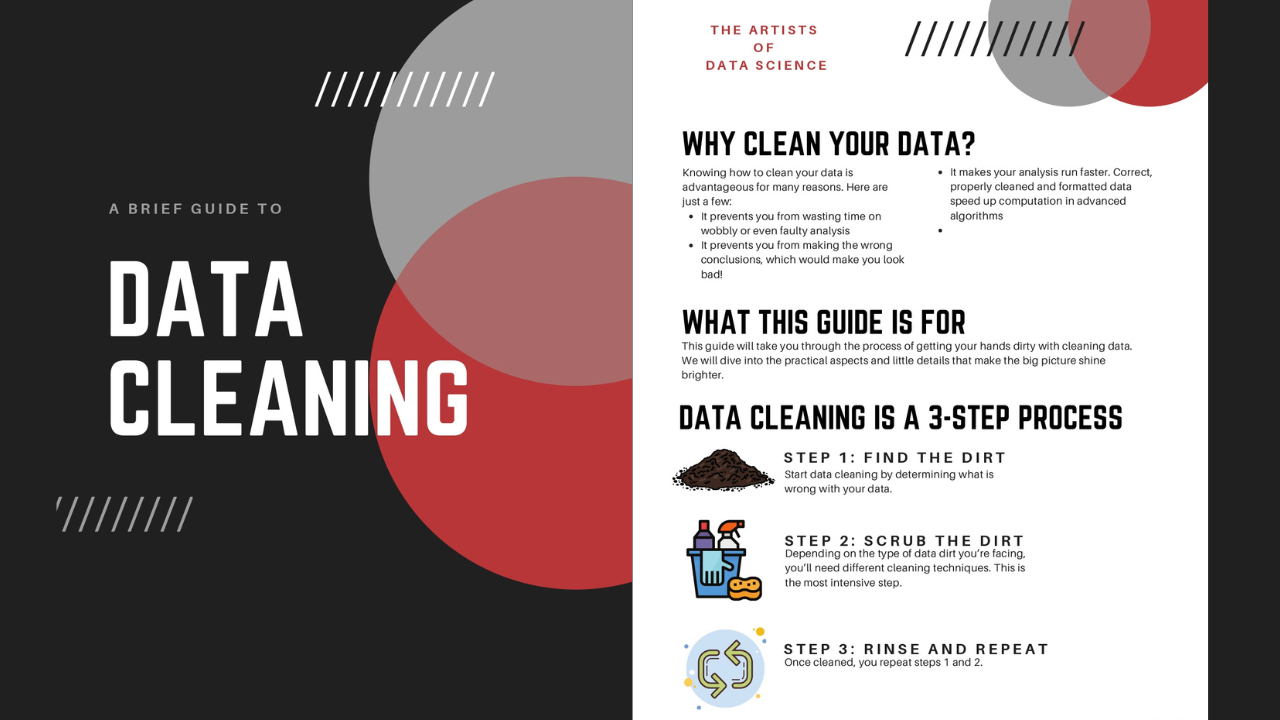
The Data Cleaning Of Data Science PDF is a concise guide that treats cleaning like a craft: practical, detailed, and grounded in common problems analysts actually see. It’s curated under The Artists of Data Science and authored by Harpreet Sahota, presented as a brief, easy-to-follow reference.
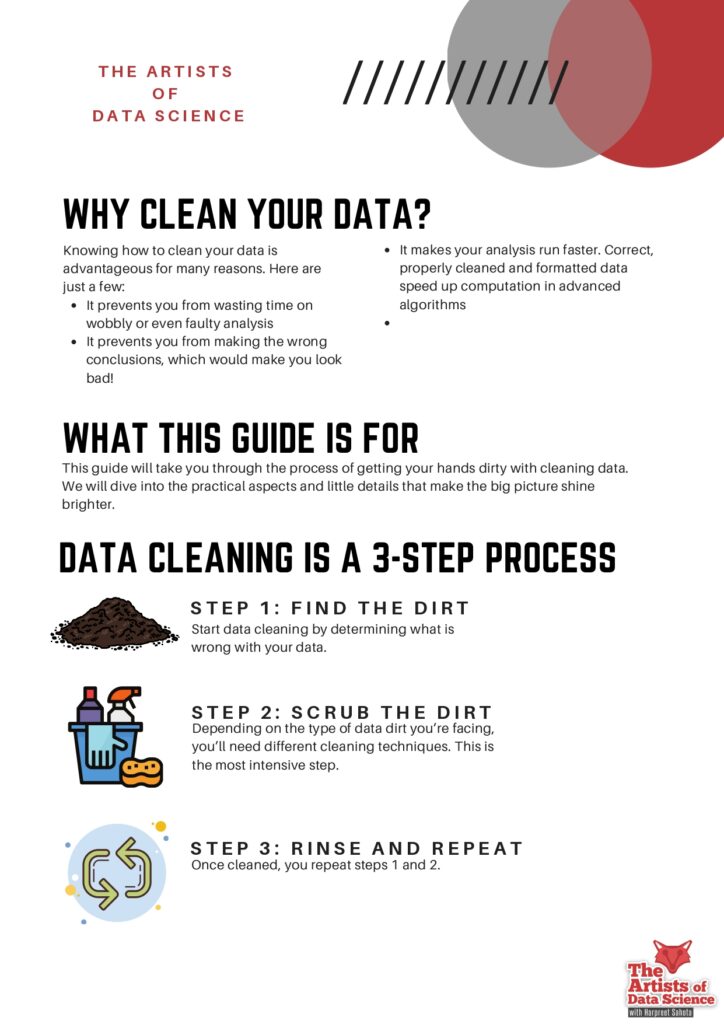
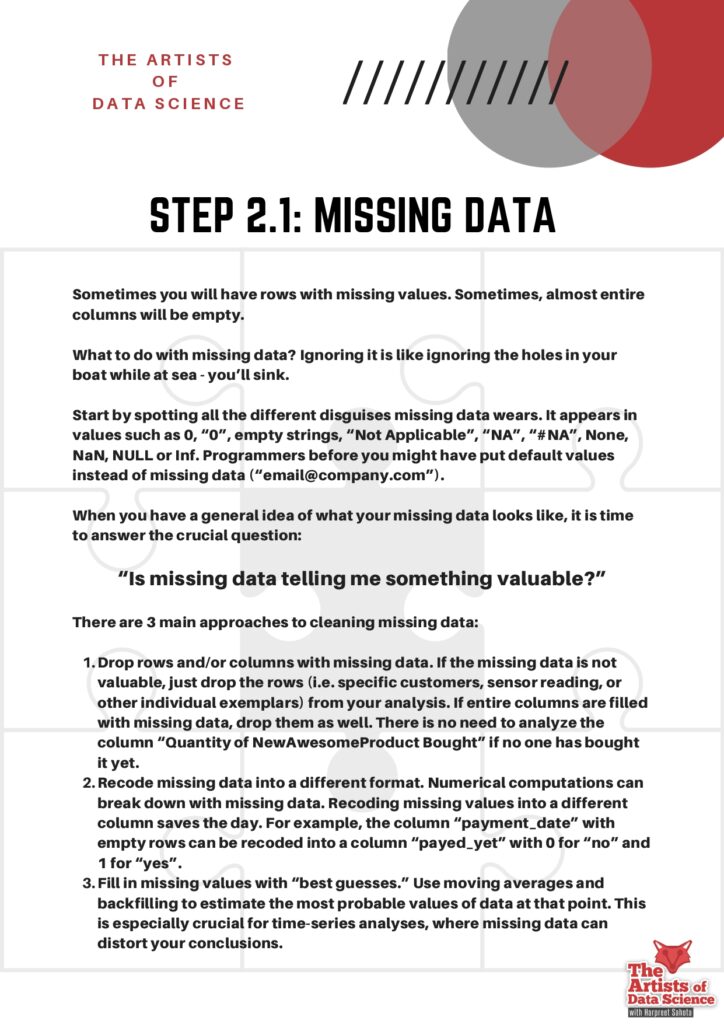
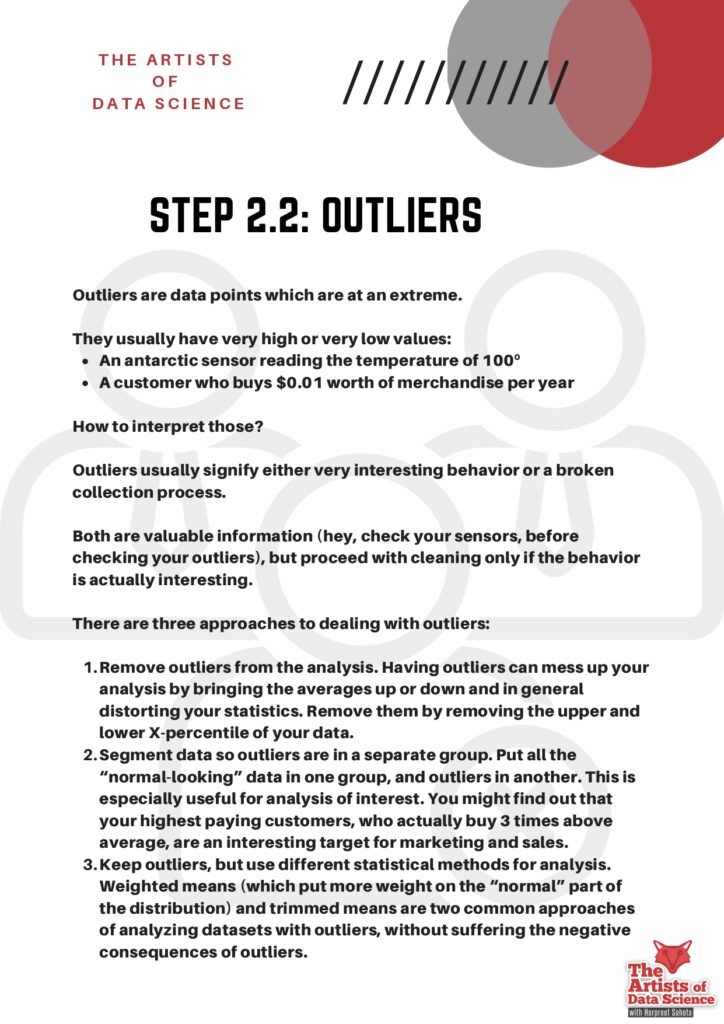
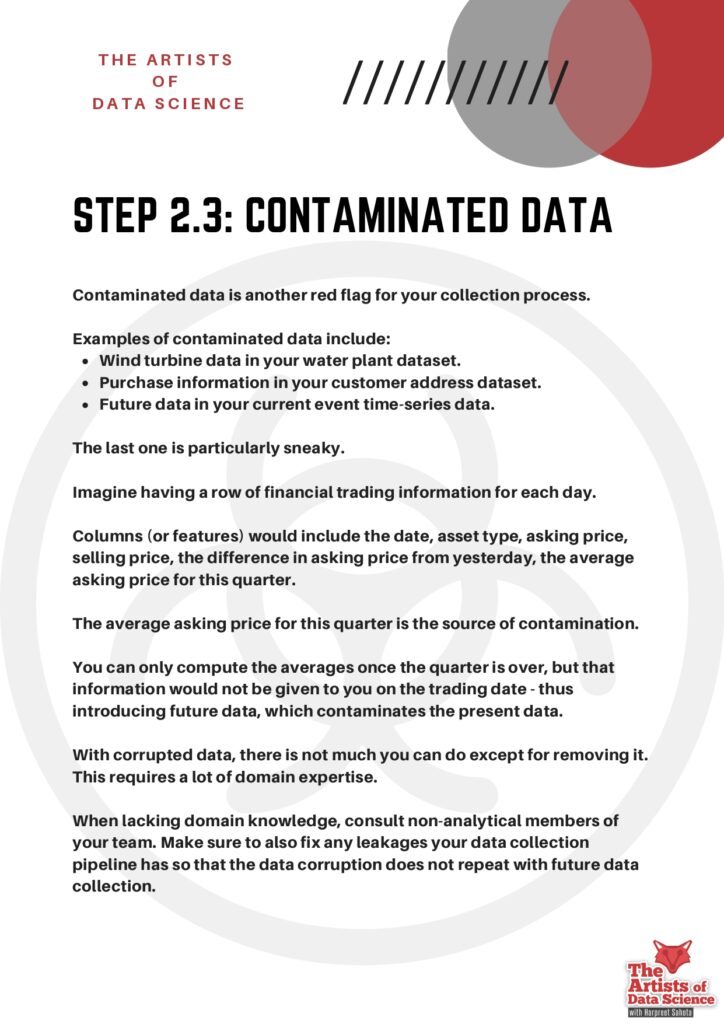
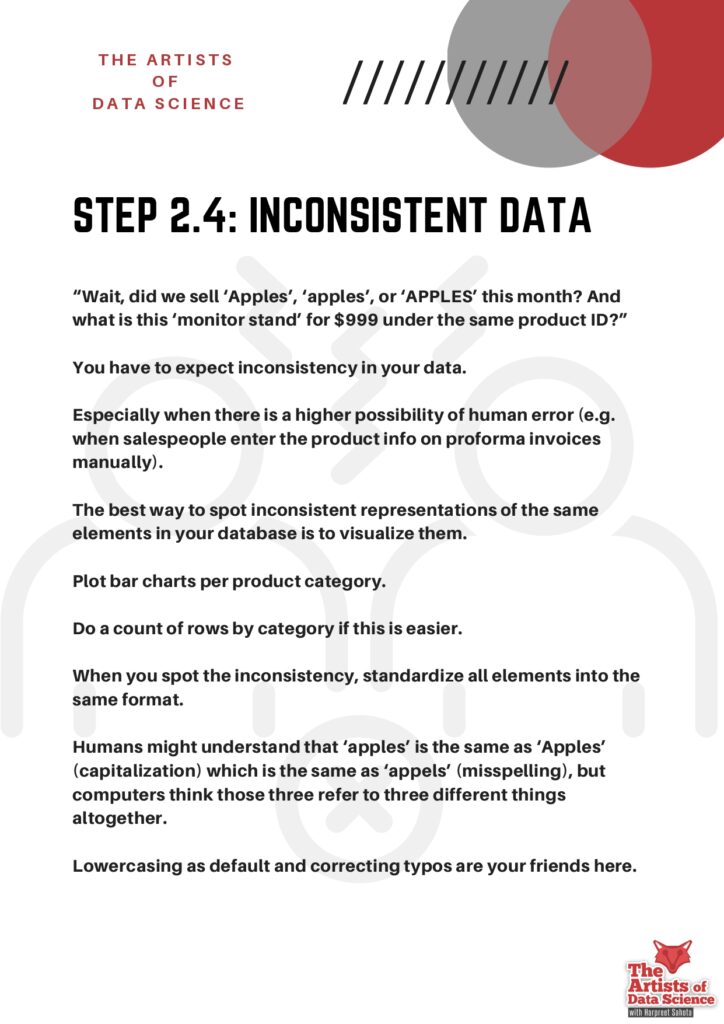
One of the biggest strengths of this guide is its simple structure: data cleaning as a 3-step process—
- Find the dirt, 2) Scrub the dirt, and 3) Rinse and repeat.
Instead of treating cleaning as a vague “preprocessing” phase, the PDF turns it into a checklist mindset: identify what’s wrong, apply the right technique for the right type of issue, then repeat because cleaning often reveals hidden problems you couldn’t see at first.
3- The Content
Here’s what you’ll find inside the PDF (and how it helps in day-to-day data science work):
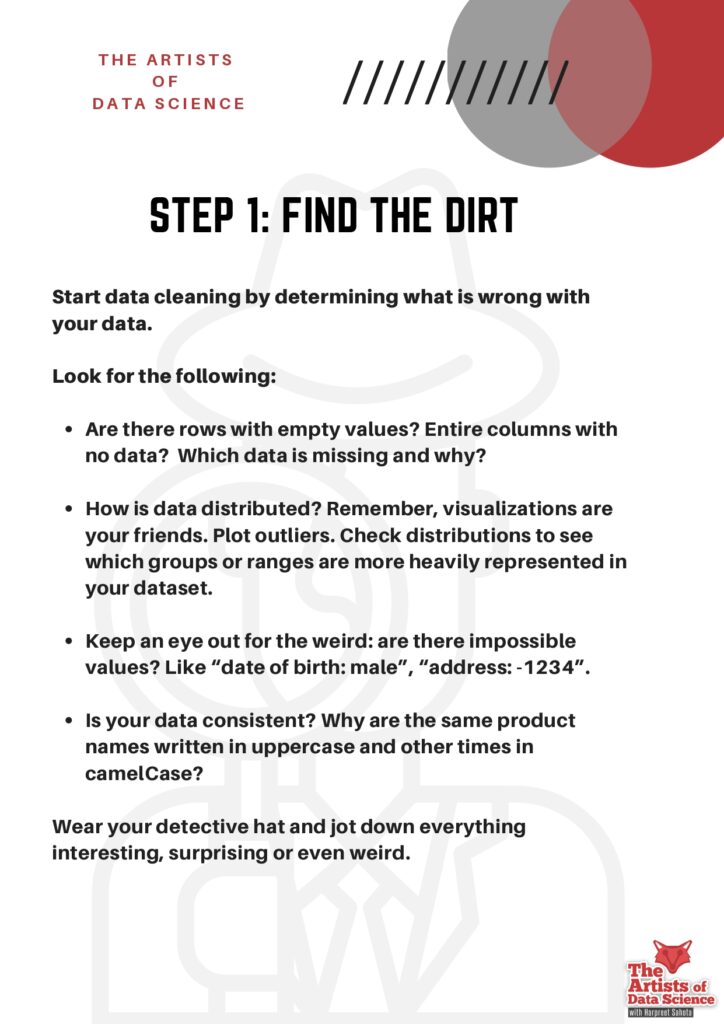
Step 1: Find the Dirt
The guide starts with detective work: spotting missing values, weird distributions, impossible entries, and inconsistencies across your dataset (like mixed casing, strange categories, or incorrect formats). It encourages you to visualize distributions and outliers early because charts can reveal problems faster than scanning rows.
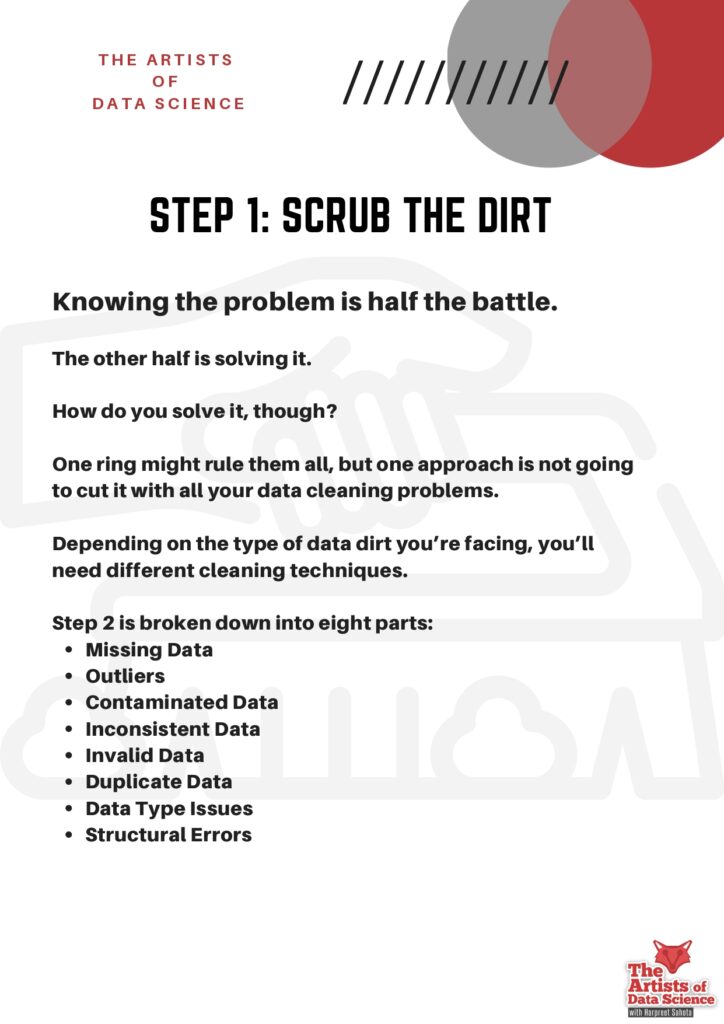
Step 2: Scrub the Dirt (8 core problem types)
This is the heart of the document: eight common categories of messy data, plus actionable ways to fix them.
- Missing Data: Recognize the many disguises of missingness (0, “NA”, NULL, blanks, NaN, etc.). Then choose one of three approaches: drop, recode, or fill using informed estimates (especially for time series).
- Outliers: Decide whether outliers represent “interesting behavior” or a broken collection process. Options include removing extremes, segmenting outliers, or using robust stats like trimmed/weighted means.
- Contaminated Data: Detect “leakage” or mismatched source data (e.g., future data sneaking into current records). The guide stresses removing corrupted rows and fixing the pipeline to prevent repeat contamination.
- Inconsistent Data: Standardize labels and formats (lowercasing, typo corrections, consistent naming). This is essential because computers treat tiny differences as different categories.
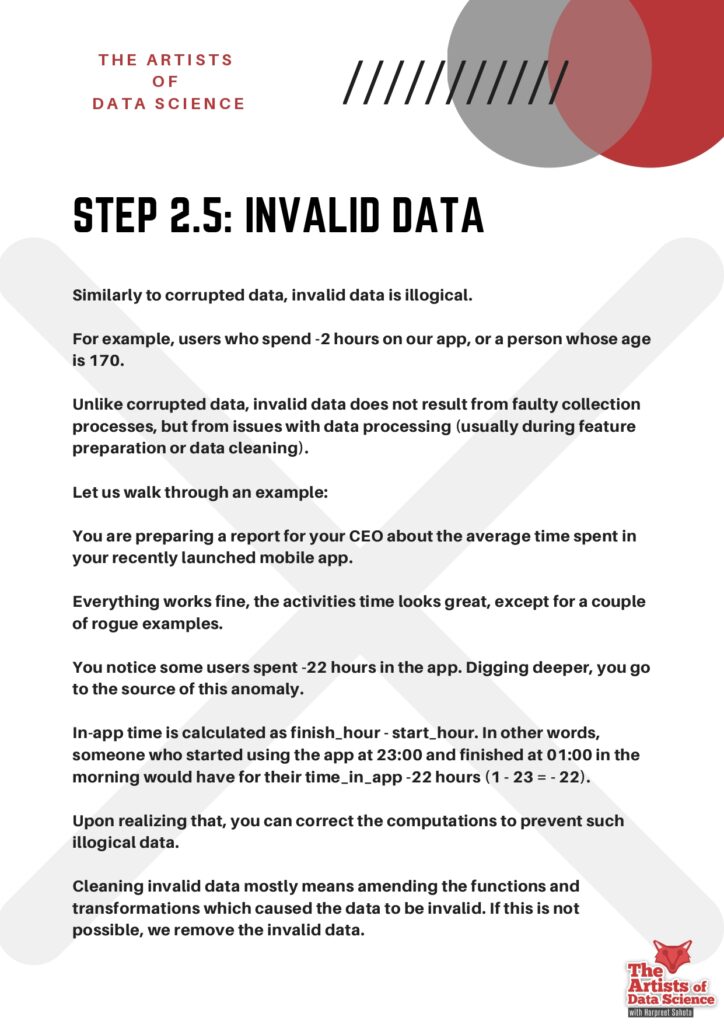
- Invalid Data: Fix illogical values often caused by processing mistakes (like negative time due to a naive time calculation). Where possible, correct the transformation logic; otherwise remove invalid rows.
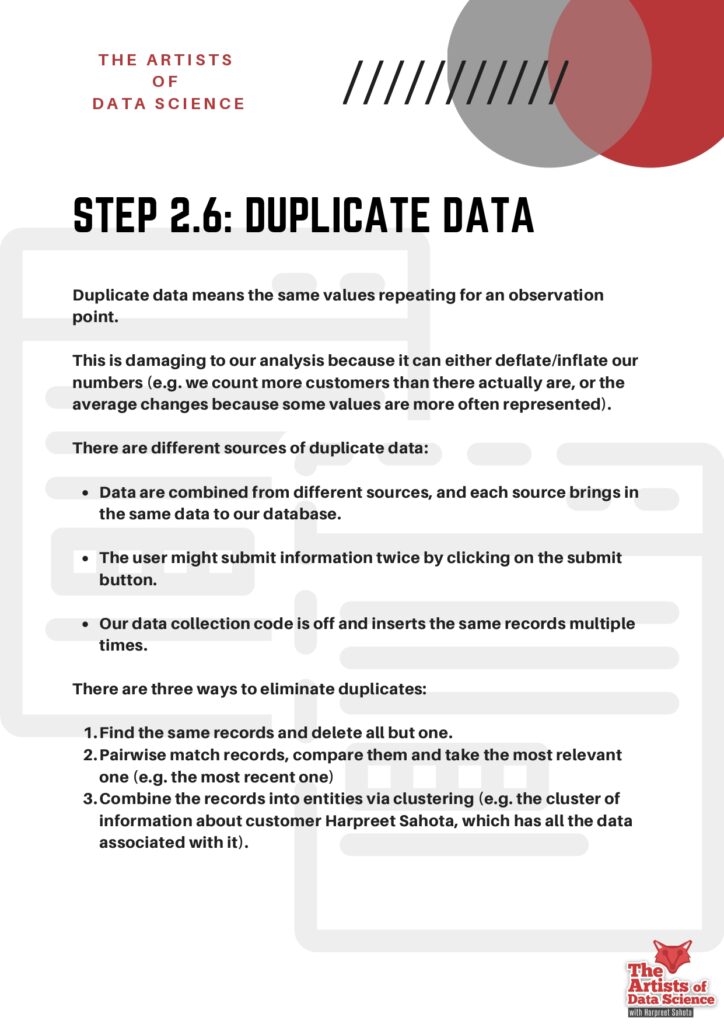
- Duplicate Data: Understand why duplicates happen (multi-source merges, double submits, buggy inserts) and remove duplicates via deletion, pairwise matching, or clustering records into entities.
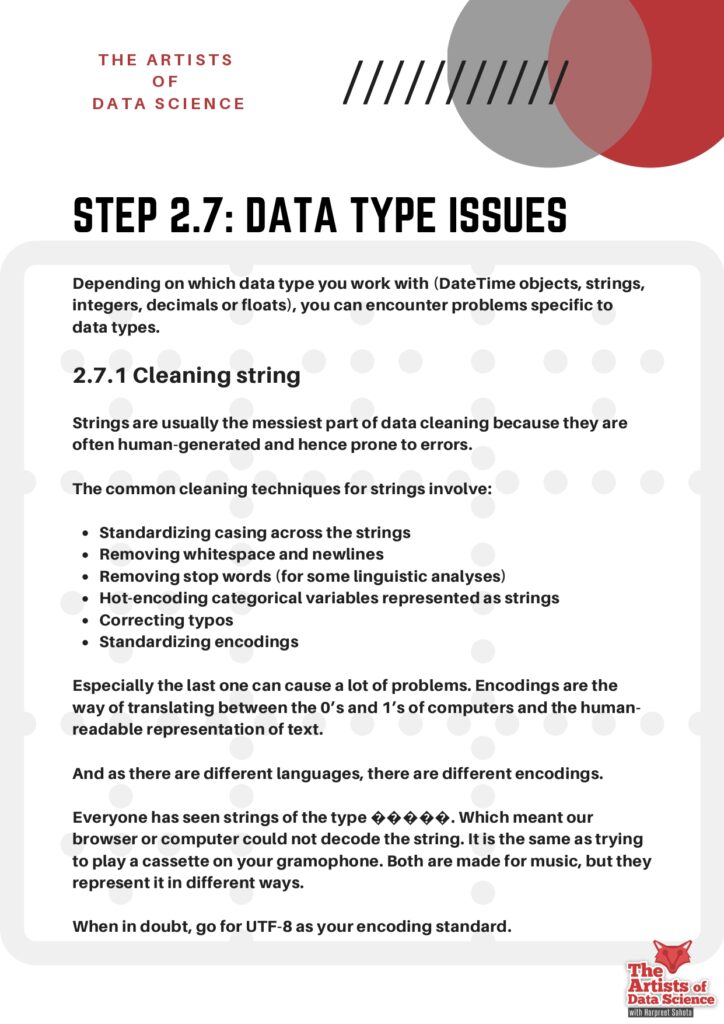
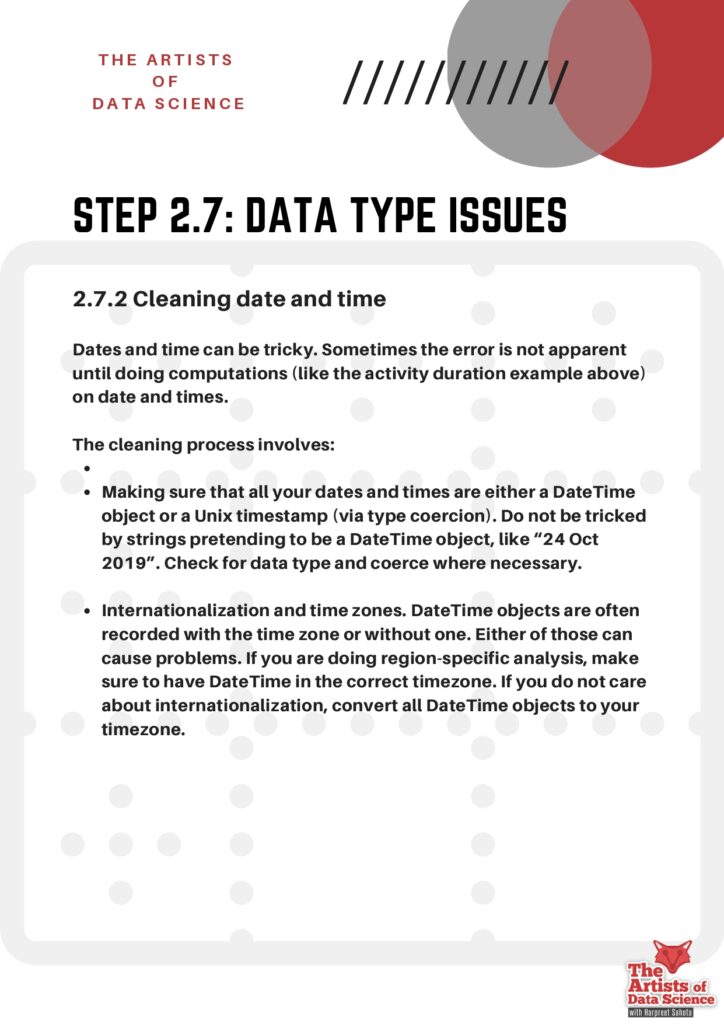
- Data Type Issues: Practical tips for messy strings (whitespace, encoding, typos, stop words) and date/time cleanup (real DateTime vs string imposters, timezone consistency).
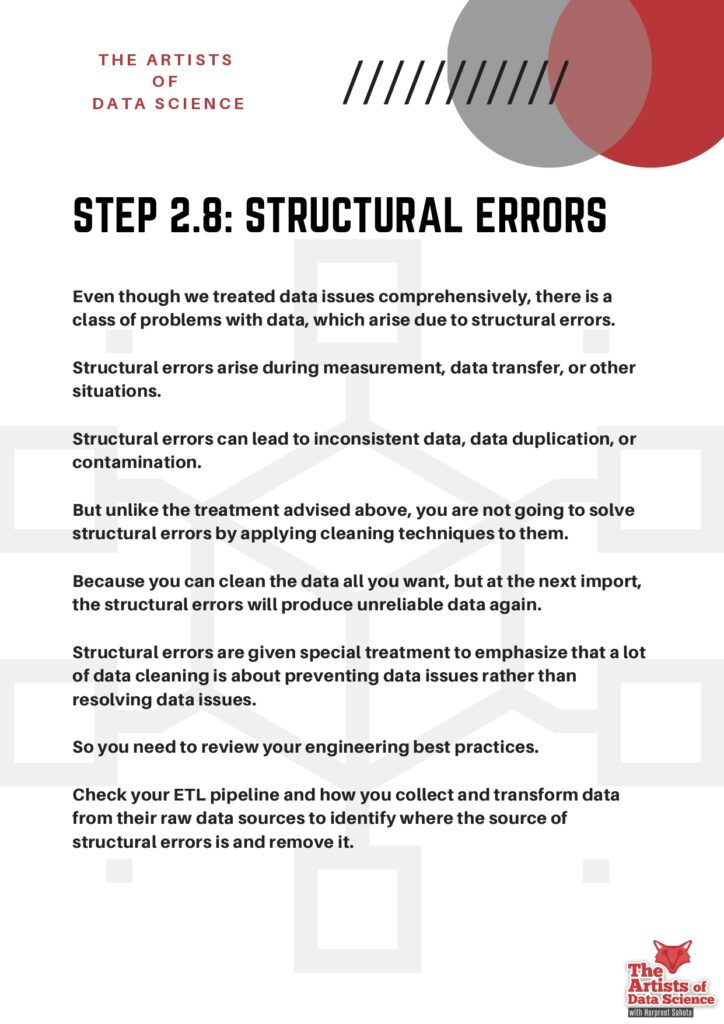
- Structural Errors: A crucial reminder: some problems aren’t solved by cleaning rows—they require fixing the ETL/data pipeline so the mess doesn’t come back on the next import.
Step 3: Rinse and Repeat + Automation
The guide highlights why repetition matters: you catch what you missed, discover new issues after earlier fixes, and learn your data more deeply each pass. It also notes that practitioners often automate repetitive cleaning steps (like standardizing strings) to save time.
4- Why The Document
This PDF is valuable because it doesn’t just say “clean your data”—it explains why it matters and how to do it with a structured approach.
According to the guide, cleaning helps you avoid wasting time on faulty analysis, prevents wrong conclusions, and can even make advanced algorithms run faster by improving formatting and correctness. In other words: clean data reduces risk and increases speed.
It also reinforces a core data science truth: “Garbage in, garbage out.” If you feed messy data into models, you don’t get “insights”—you get amplified noise. The document emphasizes that clean data often beats fancy algorithms, and that high-quality data supports every kind of decision-making—from startups to Excel-based reporting.
If you’re a student, analyst, ML engineer, or business user who wants a practical cleaning checklist, this guide is a strong companion.
5- Conclusion
Data cleaning isn’t optional—it’s the foundation of reliable analytics and trustworthy machine learning. The Data Cleaning Of Data Science PDF gives you a clean mental model (find → scrub → repeat) and breaks the messy reality of datasets into specific problem types you can actually solve: missing data, outliers, contamination, inconsistency, invalid values, duplicates, type issues, and pipeline-driven structural errors.
If you want better predictions, more accurate dashboards, and fewer “why is this metric wrong?” meetings, start by improving the quality of your input. This PDF is a simple step toward building that habit.
6- Download From the Below Link
Download the PDF here