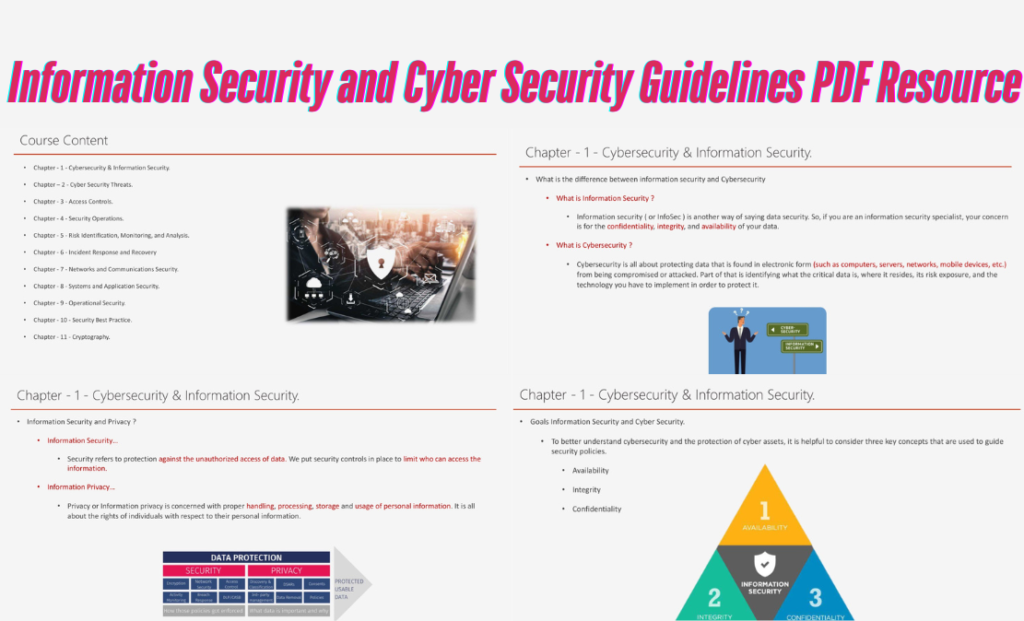
In today’s digital world, safeguarding data and systems is critical. Information security and cybersecurity are two pillars of digital protection, but they serve distinct roles. This guide breaks down their differences, explores best practices, and provides a free 152-page PDF to help you implement robust security strategies.
Information Security vs. Cybersecurity: What’s the Difference?
- Information Security (InfoSec): Focuses on protecting data’s confidentiality, integrity, and availability (CIA triad), regardless of format (digital or physical).
- Cybersecurity: A subset of InfoSec that defends systems, networks, and devices from cyberattacks (e.g., malware, phishing, ransomware).
Both fields are essential for organizations and individuals relying on technology. However, staying secure demands a systematic approach—policies, tools, and constant adaptation to evolving threats.


What’s Inside the Free PDF Guide?
Based on ISO 27001, NIST SP 800-53, and CIS Controls, this guide simplifies complex concepts with clear definitions, diagrams, and actionable tips. Here’s a sneak peek:
Course Content
- Chapter 1 – Cybersecurity & Information Security
- Chapter 2 – Cyber Security Threats
- Chapter 3 – Access Controls
- Chapter 4 – Security Operations
- Chapter 5 – Risk Identification, Monitoring, and Analysis
- Chapter 6 – Incident Response and Recovery
- Chapter 7 – Networks and Communications Security
- Chapter 8 – Systems and Application Security
- Chapter 9 – Operational Security
- Chapter 10 – Security Best Practice
- Chapter 11 – Cryptography
Why This Guide Matters
- Practical & Updated: Covers the core security domains and common modern threats.
- Structured Learning: Each topic includes subtopics, examples, and visuals.
- Actionable Insights: Highlights critical areas like risk analysis, incident response, and security controls.
Key Takeaways
Prioritize these essentials for robust security:
- Master CIA triad principles (Confidentiality, Integrity, Availability).
- Mitigate top threats like ransomware and phishing.
- Implement layered defenses (firewalls, encryption, MFA).
- Build incident response plans to minimize downtime.
- Foster a security-first culture through training and governance.
The Frameworks Behind These Guidelines
| Framework | What it is | Best for |
|---|---|---|
| ISO/IEC 27001 | International standard for an Information Security Management System (ISMS); organizations can be certified | Companies that need formal certification for customers or regulators |
| NIST Cybersecurity Framework (CSF) | High-level framework built around core functions such as Identify, Protect, Detect, Respond and Recover | Building and communicating a security program at any size |
| NIST SP 800-53 | A detailed catalog of security and privacy controls | Government and regulated environments needing detailed controls |
| CIS Controls | A prioritized list of practical safeguards | Small and medium organizations that want a clear starting point |
A 10-Point Security Checklist for Small Organizations
- Keep an up-to-date inventory of devices, software and data.
- Turn on multi-factor authentication for email, VPN and admin accounts.
- Patch operating systems and applications on a regular schedule.
- Apply least privilege: no daily work from administrator accounts.
- Use endpoint protection on every device.
- Follow the 3-2-1 backup rule and test restores.
- Encrypt laptops and sensitive data at rest and in transit.
- Segment the network and protect it with a properly configured firewall.
- Run regular security awareness training, especially on phishing.
- Write and rehearse a simple incident response plan.
Frequently Asked Questions
Is cybersecurity the same as information security?
Not exactly. Information security protects information in every form, including paper and verbal. Cybersecurity focuses on protecting digital systems, networks and data from cyber attacks.
Which framework should a small company start with?
The CIS Controls are usually the easiest starting point because they are prioritized and practical. The NIST CSF is useful to organize the overall program, and ISO 27001 makes sense when customers ask for certification.
Who is this PDF for?
Students, IT staff moving into security, and managers who need a structured overview of security operations, risk, incident response and cryptography.
Download Your Free Guide
Ready to strengthen your security posture? Click here to download the Information Security and Cybersecurity Guidelines PDF instantly.
Final Thoughts
Security is a journey, not a destination. Use this guide alongside courses, workshops, and regular audits to stay ahead of threats. Remember: proactive measures today prevent breaches tomorrow.
Download Now: Information Security and Cybersecurity Guidelines PDF
Related Free Cybersecurity Resources
- Introduction to IoT Security (PDF)
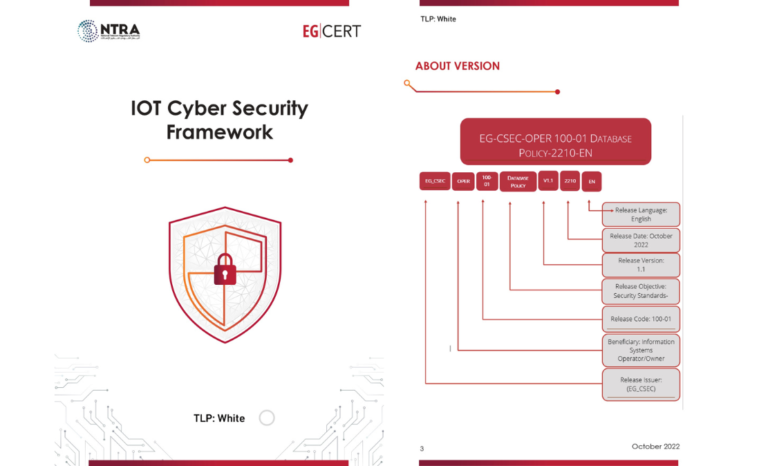
- IoT CyberSecurity Framework PDF
- IoT Security Guide PDF: Safeguarding the Connected World
- Cyber Security – Standards and Best Practices PDF
- Top 100 Cyber Threats PDF
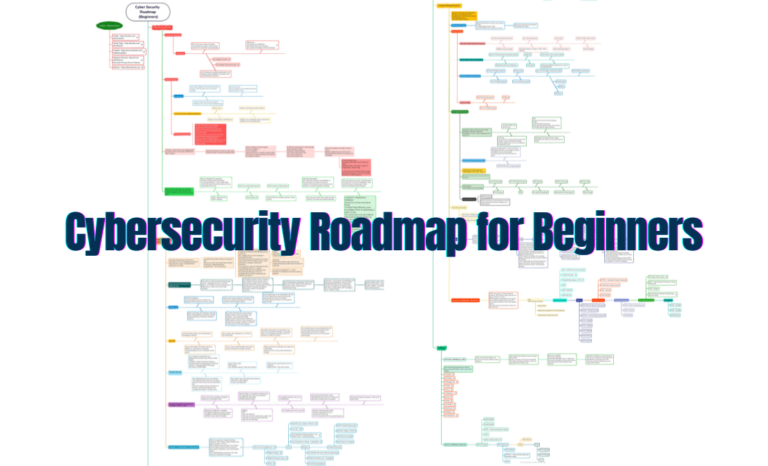
- Cybersecurity Roadmap for Beginners: A Comprehensive PDF Guide