Introduction
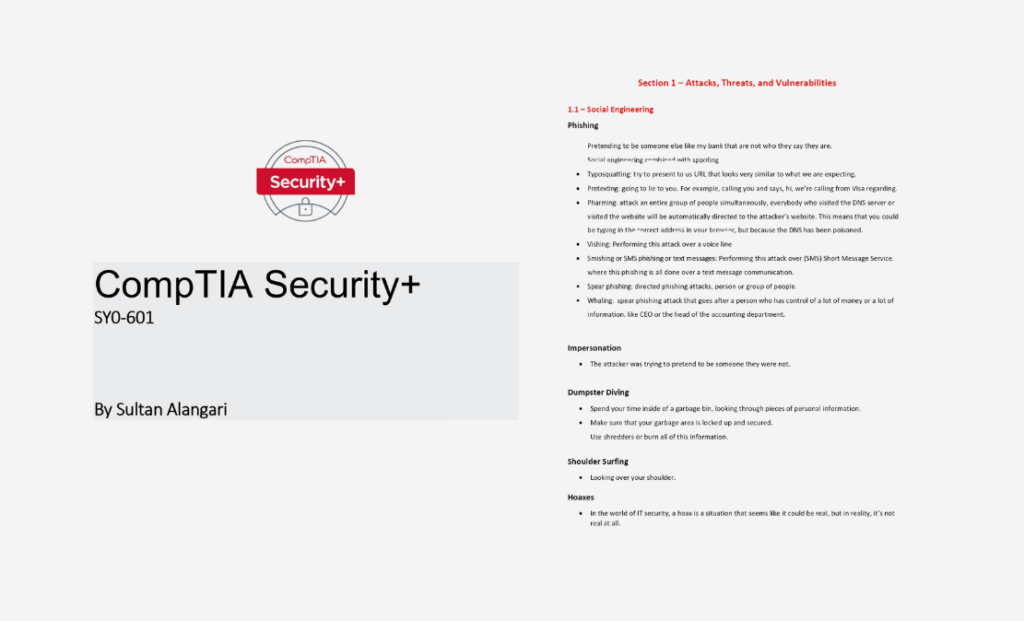
The CompTIA Security+ certification is the gold standard for launching a cybersecurity career. But with a vast syllabus covering threats, cryptography, network security, and more, exam prep can feel overwhelming. Our CompTIA Security+ Notes PDF cuts through the noise, delivering 81 pages of focused, exam-aligned content to help you master key concepts, pass the test, and stand out in the job market.
Why These Notes?
- Exam-Focused: Covers the core Security+ objectives, mapped below to the current SY0-701 domains.
- Real-World Ready: Practical examples (e.g., ransomware mitigation, firewall rules).
- Concise & Actionable: No textbook fluff—just what you need to pass.
- Free & Accessible: Downloadable PDF for on-the-go study.


Table OF Content
1. Attacks, Threats, and Vulnerabilities
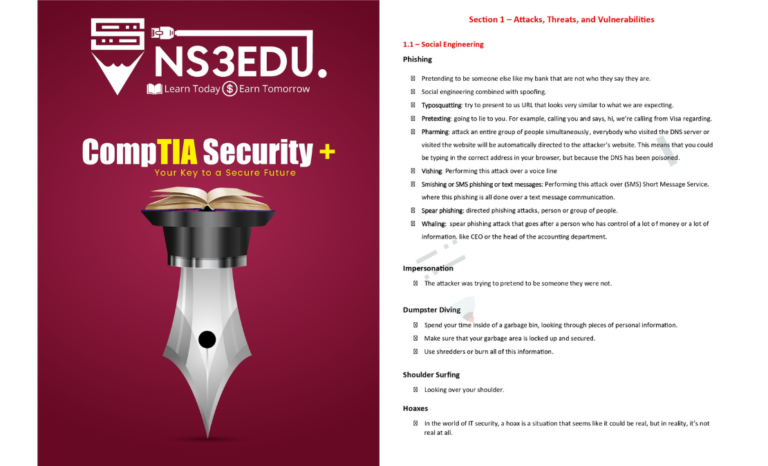
1.1 Social Engineering
- Phishing
- Impersonation
- Dumpster Diving
- Shoulder Surfing
- Hoaxes
- Watering Hole Attacks
- Spam
- Influence Campaigns
- Other Social Engineering Attacks
- Principles of Social Engineering
1.2 Attack Types
- Overview of Malware
- Viruses and Worms
- Ransomware and Crypto-malware
- Trojans and RATs
- Rootkits
- Spyware
- Bots and Botnets
- Logic Bombs
- Password Attacks
- Physical Attacks
- Adversarial Artificial Intelligence
- Supply Chain Attacks
- Cloud-based vs. On-Premises Attacks
- Cryptographic Attacks
1.3 Application Attacks
- Privilege Escalation
- Cross-site Scripting (XSS)
- Injection Attacks
- Buffer Overflows
- Replay Attacks
- Request Forgeries
- Driver Manipulation
- SSL Stripping
- Race Conditions
- Other Application Attacks
1.4 Network Attacks
- Rogue Access Points and Evil Twins
- Bluejacking and Bluesnarfing
- Wireless Disassociation Attacks
- Wireless Jamming
- RFID and NFC Attacks
- Randomizing Cryptography
- On-Path Attacks
- MAC Flooding and Cloning
- DNS Attacks
- Denial of Service (DoS)
- Malicious Scripts
1.5 Threat Actors and Vectors
- Threat Actors
- Attack Vectors
- Threat Intelligence
- Threat Research
1.6 Vulnerabilities
- Vulnerability Types
- Third-party Risks
- Vulnerability Impacts
1.7 Security Assessments
- Threat Hunting
- Vulnerability Scans
- Security Information and Event Management (SIEM)
1.8 Penetration Testing
- Penetration Testing
- Reconnaissance
- Security Teams
2. Architecture and Design
2.1 Enterprise Security
- Configuration Management
- Protecting Data
- Data Loss Prevention (DLP)
- Managing Security
- Site Resiliency
- Honeypots and Deception
2.2 Virtualization and Cloud Computing
- Cloud Models
- Edge and Fog Computing
- Designing the Cloud
- Infrastructure as Code (IaC)
- Virtualization Security
2.3 Secure Application Development
- Secure Deployments
- Provisioning and Deprovisioning
- Secure Coding Techniques
- Software Diversity
- Automation and Scripting
2.4 Authentication and Authorization
- Authentication Methods
- Biometrics
- Multi-factor Authentication (MFA)
2.5 Resilience
- Disk Redundancy
- Network Redundancy
- Power Redundancy
- Replication
- Backup Types
- Resiliency
2.6 Embedded Systems
- Embedded Systems
- Embedded Systems Communication
- Embedded Systems Constraints
2.7 Physical Security Controls
- Physical Security Controls
- Secure Areas
- Secure Data Destruction
2.8 Cryptographic Concepts
- Cryptography Concepts
- Symmetric and Asymmetric Cryptography
- Hashing and Digital Signatures
- Cryptographic Keys
- Steganography
- Quantum Computing
- Stream and Block Ciphers
- Blockchain Technology
- Cryptography Use Cases
- Cryptography Limitations
3. Implementation
3.1 Secure Protocols
- Secure Protocols
3.2 Host and Application Security
- Endpoint Protection
- Boot Integrity
- Database Security
- Application Security
- Application Hardening
3.3 Secure Network Designs
- Load Balancing
- Network Segmentation
- Virtual Private Networks (VPNs)
- Port Security
- Secure Networking
- Firewalls
- Network Access Control (NAC)
- Proxy Servers
- Intrusion Prevention
- Other Network Appliances
3.4 Wireless Security
- Wireless Cryptography
- Wireless Authentication Methods
- Wireless Authentication Protocols
- Installing Wireless Networks
3.5 Mobile Security
- Mobile Networks
- Mobile Device Management (MDM)
- Mobile Device Security
- Mobile Device Enforcement
- Mobile Deployment Models
3.6 Cloud Security
- Cloud Security Controls
- Securing Cloud Storage
- Securing Cloud Networks
- Securing Compute Clouds
- Cloud Security Solutions
3.7 Identity and Account Management
- Identity Controls
- Account Types
- Account Policies
3.8 Authentication and Authorization Services
- Authentication Management
- PAP and CHAP
- Identity and Access Services
- Federated Identities
- Access Control
3.9 Public Key Infrastructure
- Public Key Infrastructure (PKI)
- Certificates
- Certificate Formats
- Certificate Concepts
4. Operations and Incident Response
4.1 Security Tools
- Reconnaissance Tools – Part 1
- Reconnaissance Tools – Part 2
- File Manipulation Tools
- Shell and Script Environments
- Packet Tools
- Forensic Tools
4.2 Incident Response
- Incident Response Process
- Incident Response Planning
- Attack Frameworks
4.3 Investigations
- Vulnerability Scan Output
- SIEM Dashboards
- Log Files
- Log Management
4.4 Securing an Environment
- Endpoint Security Configuration
- Security Configurations
4.5 Digital Forensics
- Digital Forensics
- Forensics Data Acquisition
- On-Premises vs. Cloud Forensics
- Managing Evidence
5. Governance, Risk, and Compliance
5.1 Security Controls
- Security Controls
5.2 Regulations, Standards, and Frameworks
- Security Regulations and Standards
- Security Frameworks
- Secure Configurations
5.3 Organizational Security Policies
- Personnel Security
- Third-party Risk Management
- Managing Data
- Credential Policies
- Organizational Policies
5.4 Risk Management
- Risk Management Types
- Risk Analysis
- Business Impact Analysis
5.5 Data Privacy
- Privacy and Data Breaches
- Data Classifications
- Enhancing Privacy
- Data Roles and Responsibilities
How These Notes Map to the SY0-701 Exam Domains
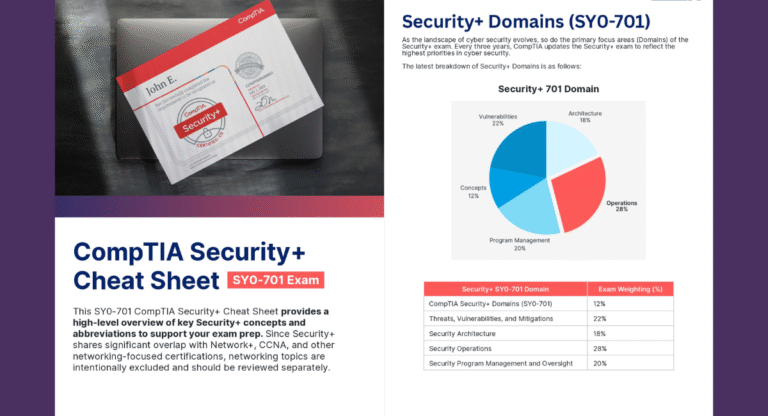
The notes follow the classic five-section Security+ structure shown above. The current SY0-701 exam groups the objectives into five new domains. Use this table to find the right part of the notes for each SY0-701 domain:
| SY0-701 Domain | Weight | Where to study it in these notes |
|---|---|---|
| 1.0 General Security Concepts | 12% | 2.8 Cryptographic Concepts, 3.9 PKI, 5.1 Security Controls, 2.1 Enterprise Security (deception, change/configuration management) |
| 2.0 Threats, Vulnerabilities & Mitigations | 22% | Section 1: social engineering, malware, application and network attacks, threat actors, vulnerabilities |
| 3.0 Security Architecture | 18% | 2.2 Virtualization & Cloud, 2.5 Resilience, 2.6 Embedded Systems, 3.3 Secure Network Designs, 3.6 Cloud Security |
| 4.0 Security Operations | 28% | 3.2 Host & Application Security, 3.4 Wireless, 3.5 Mobile, 3.7–3.8 Identity & Access, all of Section 4 (tools, incident response, forensics) |
| 5.0 Security Program Management & Oversight | 20% | Section 5: regulations and frameworks, policies, third-party risk, risk management, data privacy |
Domain 4.0 (Security Operations) carries the most weight on SY0-701, so give Sections 3 and 4 of the notes extra review time.
Security+ Quick-Review Cheat Sheet
These are high-yield facts that candidates often mix up. Make sure you can answer each one without looking:
- Control categories vs. types: categories are technical, managerial, operational and physical. Types are preventive, deterrent, detective, corrective, compensating and directive.
- Symmetric vs. asymmetric: AES is symmetric (fast, one shared key). RSA and ECC are asymmetric (a key pair, used for key exchange and digital signatures).
- Hashing vs. encryption: a hash (such as SHA-256) is one-way and proves integrity. Encryption is reversible and protects confidentiality.
- Secure protocol ports: SSH 22, DNS 53, HTTPS 443, LDAPS 636, SFTP 22, IMAPS 993, POP3S 995, SNMPv3 161/162.
- Backup types: full; incremental (changes since the last backup of any kind); differential (changes since the last full backup).
- Incident response: preparation → detection → analysis → containment → eradication → recovery → lessons learned.
- Risk formulas: SLE = Asset Value × Exposure Factor, and ALE = SLE × ARO.
- Zero Trust: the control plane (policy engine and policy administrator) makes decisions, and the data plane enforces them at the policy enforcement point.
A Simple 4-Week Study Plan with These Notes
- Week 1: Section 1 (threats, attacks and vulnerabilities) plus cryptography (2.8).
- Week 2: Sections 2 and 3 (architecture, cloud, network design, identity and access).
- Week 3: Sections 4 and 5 (operations, incident response, governance, risk and compliance).
- Week 4: practice exams. Map every wrong answer back to its section in the notes and re-read it.
Frequently Asked Questions
What is the Security+ SY0-701 exam format?
SY0-701 has up to 90 multiple-choice and performance-based questions, a 90-minute time limit, and a passing score of 750 on a 100–900 scale. Always confirm the current details on CompTIA’s official website before you book.
Are these notes enough to pass Security+?
The notes cover the core concepts, but you should combine them with practice questions and some hands-on work, especially for the performance-based questions. Use the notes as your main review document.
Is Security+ good for beginners?
Yes. Security+ is an entry-level certification and a common first step into cybersecurity. Basic networking knowledge (at the level of Network+ or CCNA basics) makes it much easier.
More Free Security+ Resources
- CompTIA Security+ SY0-701 Exam Cheat Sheet PDF
- 100 Practice Questions for CompTIA Security+ SY0-701 PDF
- CompTIA Security+ SY0-701 Full Learning Guide PDF
- CompTIA Security+ Master Cheat Sheet PDF
- CompTIA Security+ Study Guide PDF
Who Needs This Guide?
- Exam Candidates: Streamline study sessions with structured notes.
- Career Shifters: Break into cybersecurity with foundational knowledge.
- IT Professionals: Validate skills for promotions or new roles.
Why 81 Pages?
This guide balances depth and efficiency:
- No Overload: Covers the core Security+ objectives without unnecessary detail.
- Quick Reference: Bolded terms, tables, and diagrams for rapid review.
- Lifetime Resource: Save sections like Cryptography Cheat Sheet for future use.
Download Your Free CompTIA Security+ Notes
Ready to conquer the exam? Click below to get your PDF:
🔗 Download CompTIA Security+ Notes Here