Introduction
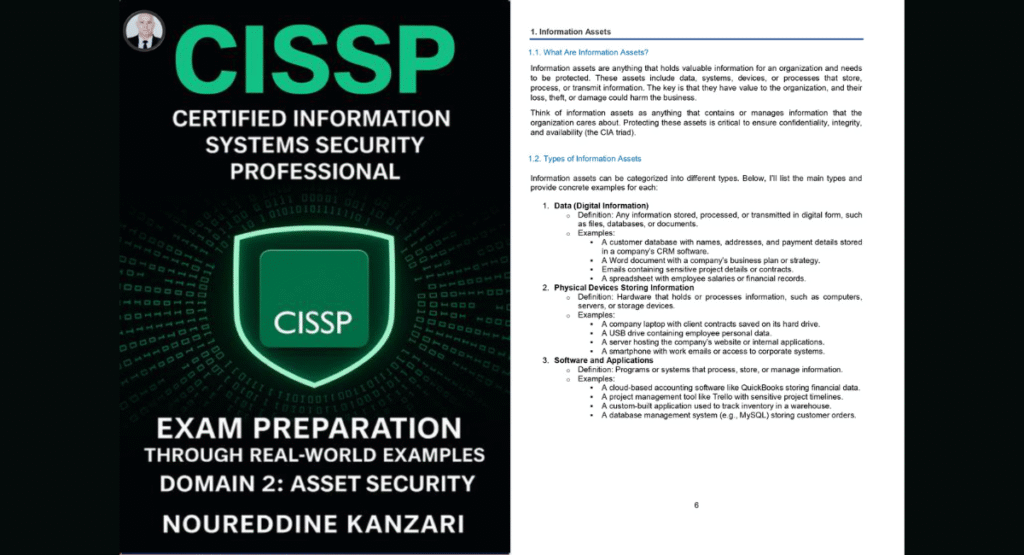
As cybersecurity threats continue to evolve, so does the need for qualified professionals. The CISSP (Certified Information Systems Security Professional) is a globally recognized certification that validates your skills and knowledge in information security. This blog post introduces our comprehensive CISSP exam preparation PDF, designed to help you succeed.
Overview About the Document
This CISSP exam preparation PDF serves as an essential tool for anyone looking to enhance their understanding of cybersecurity principles and practices. It combines theoretical knowledge with practical examples to ensure that candidates grasp the complexities of the exam topics.
The Content
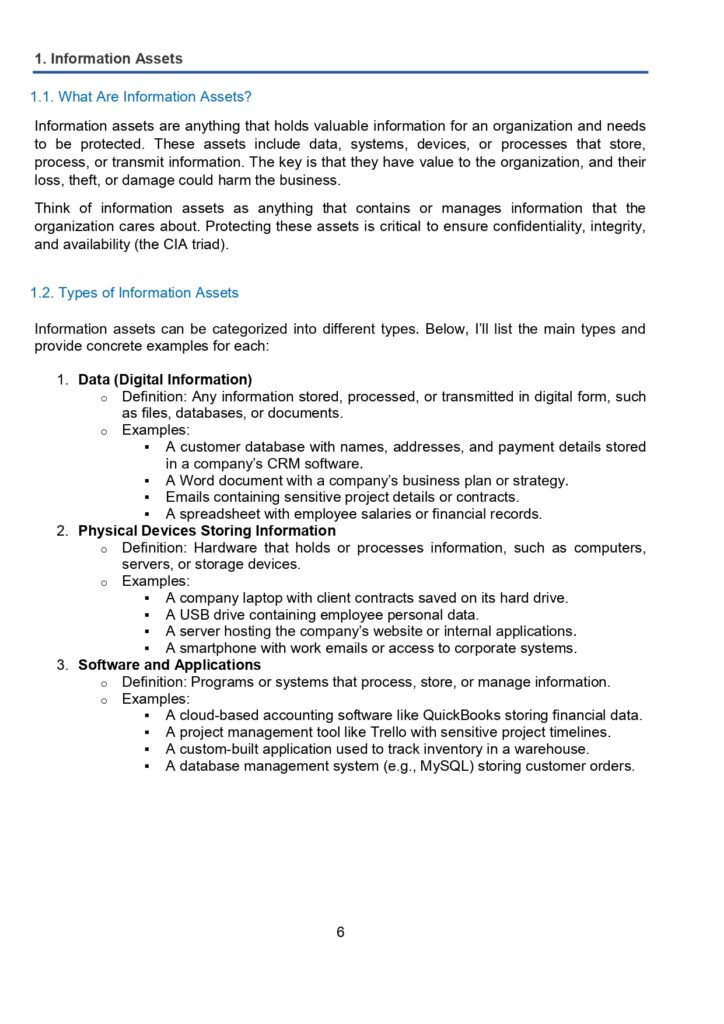
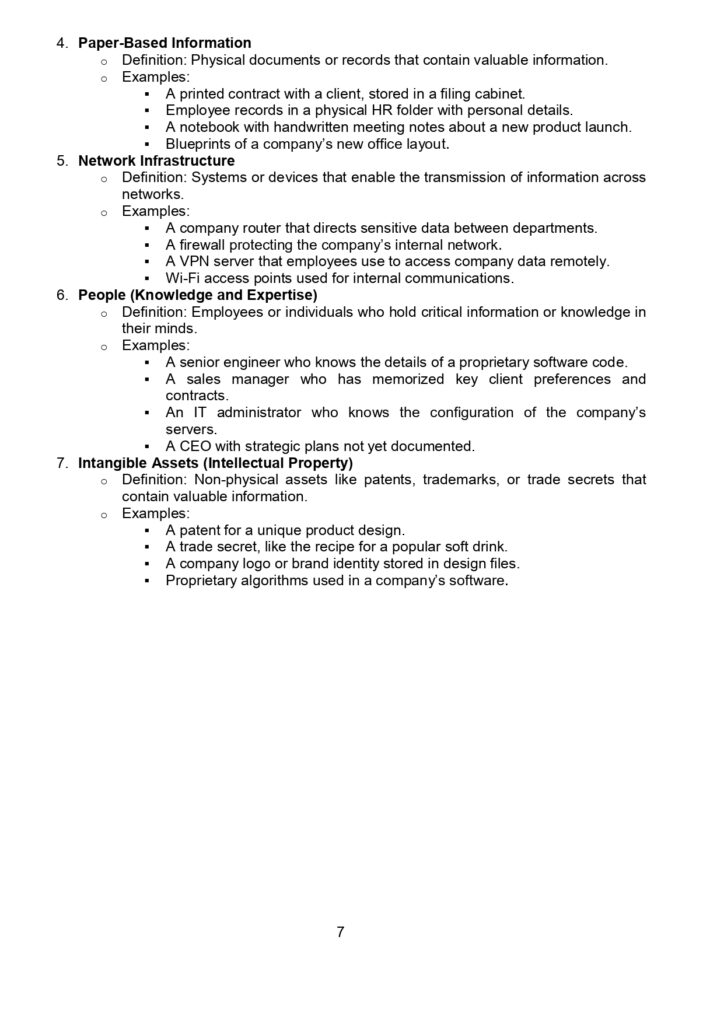
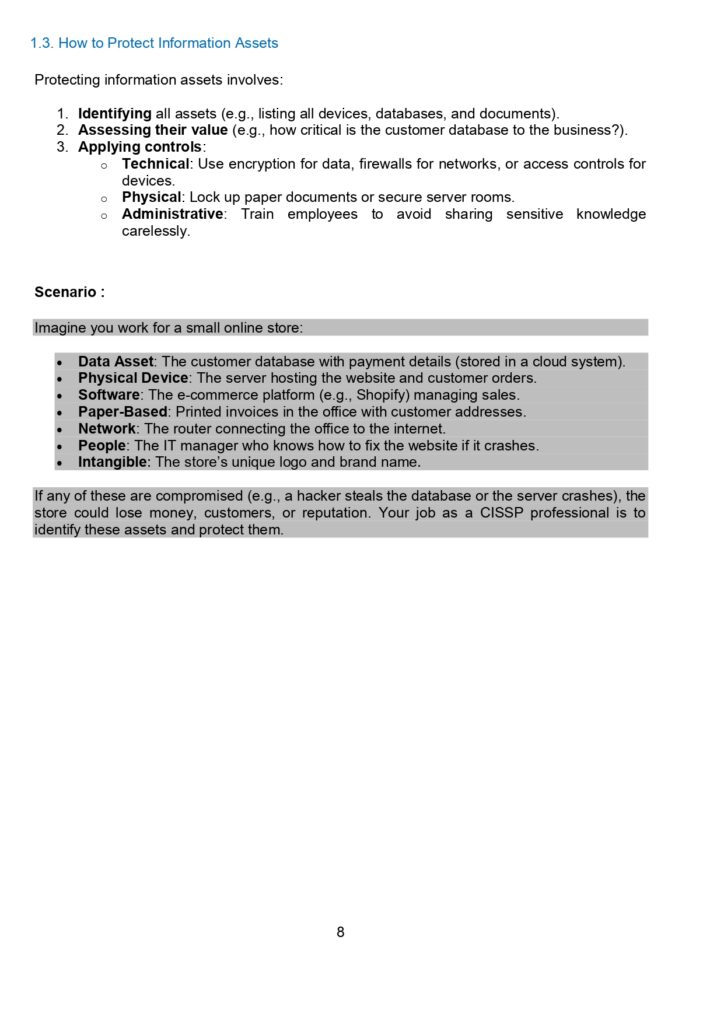
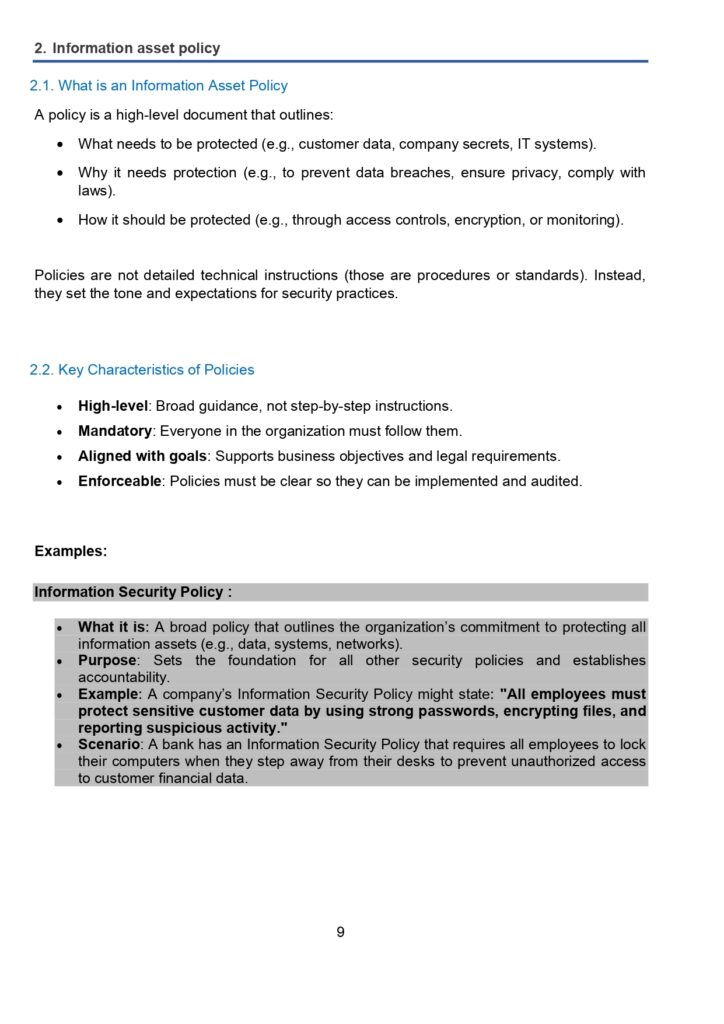
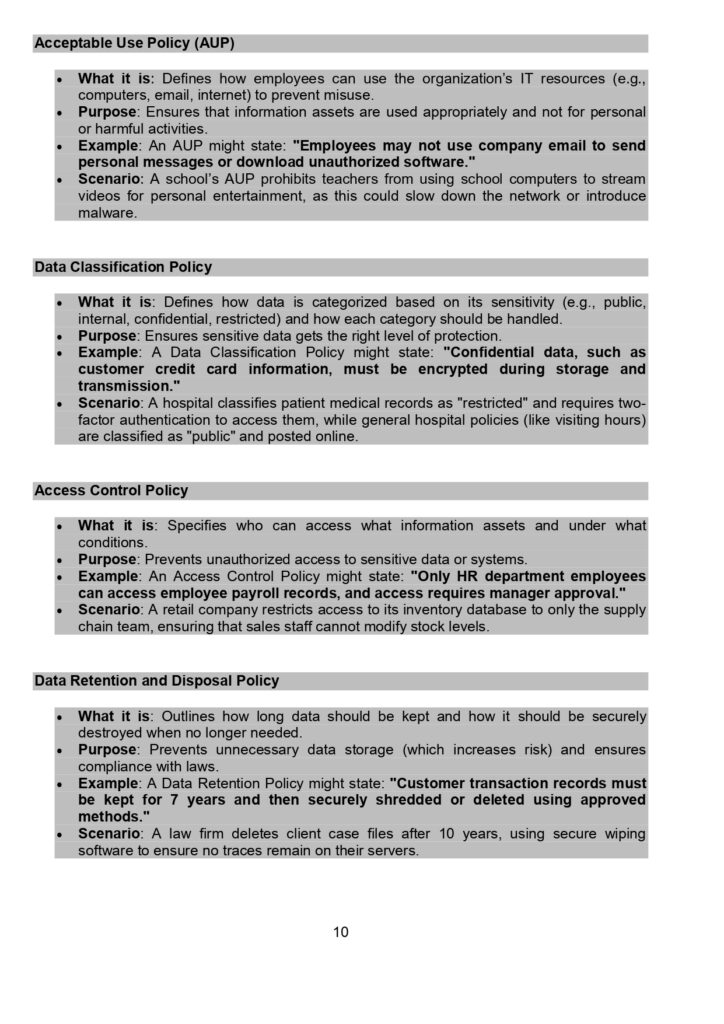
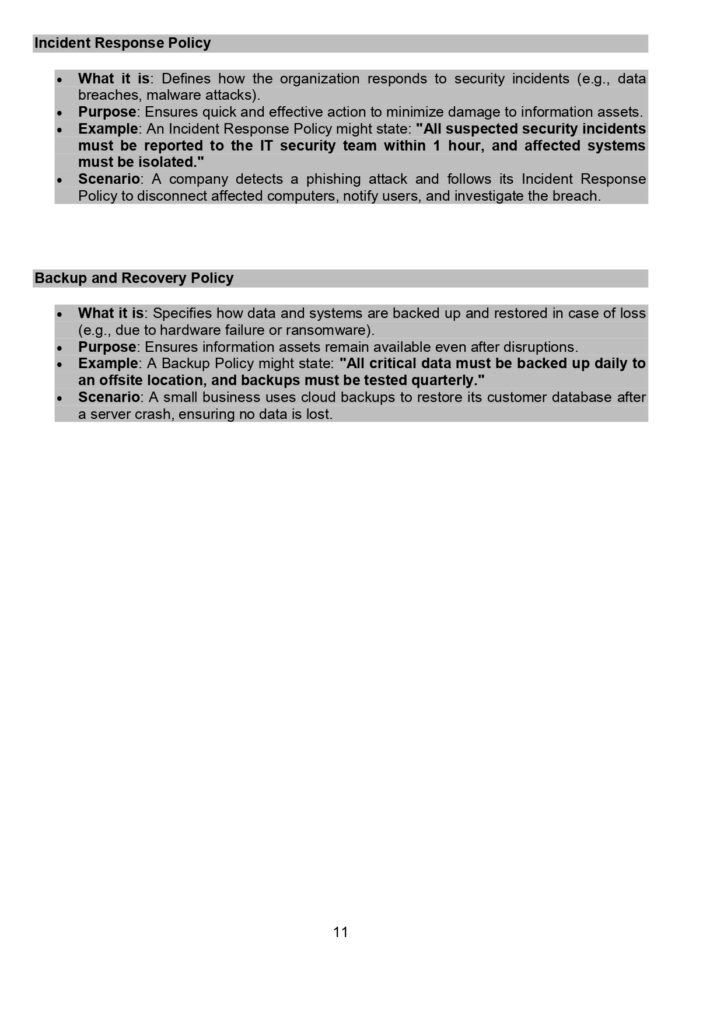
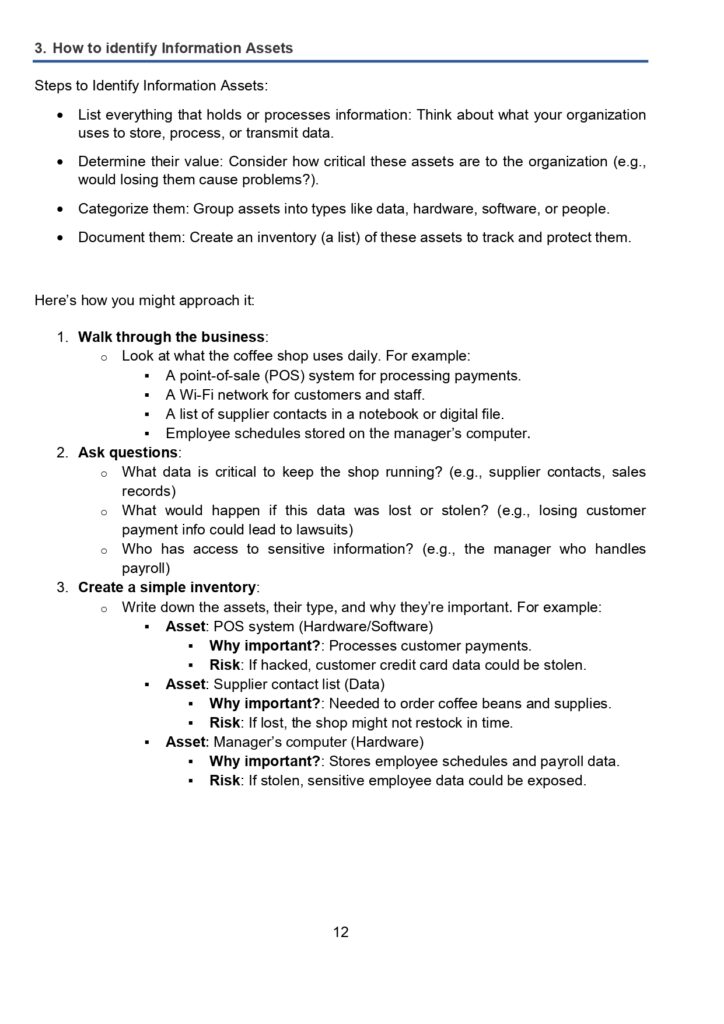
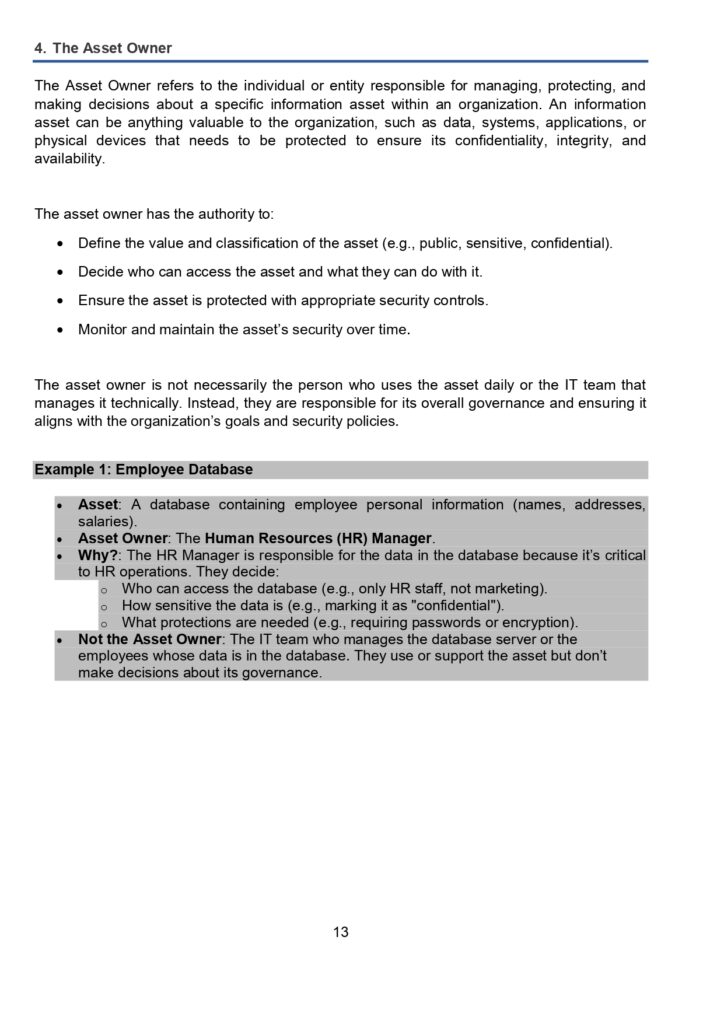
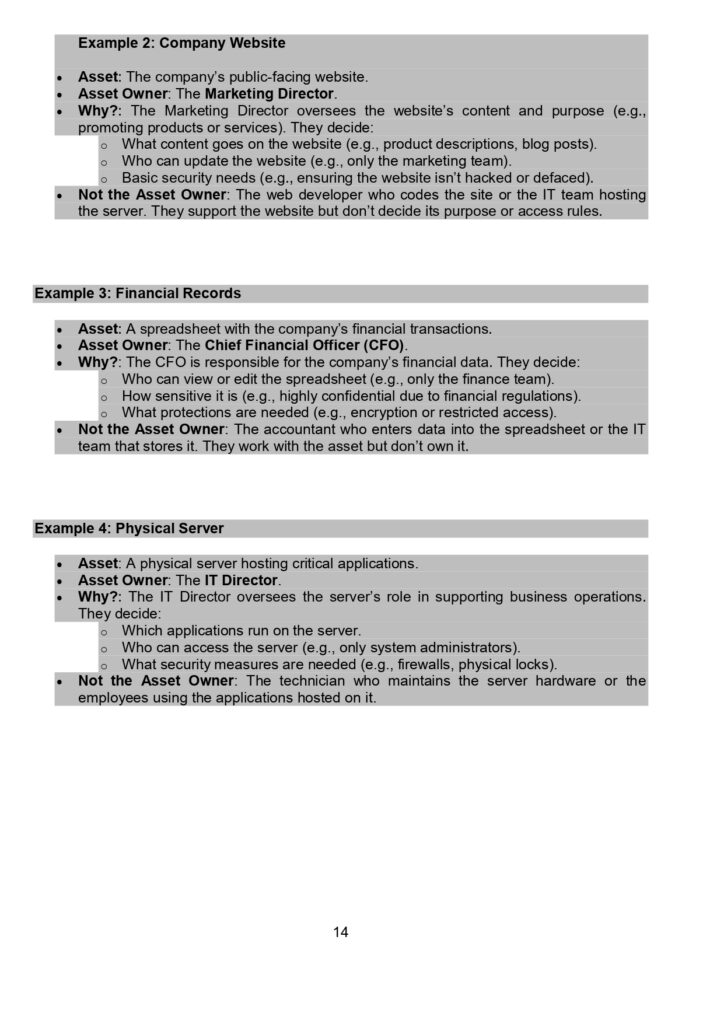
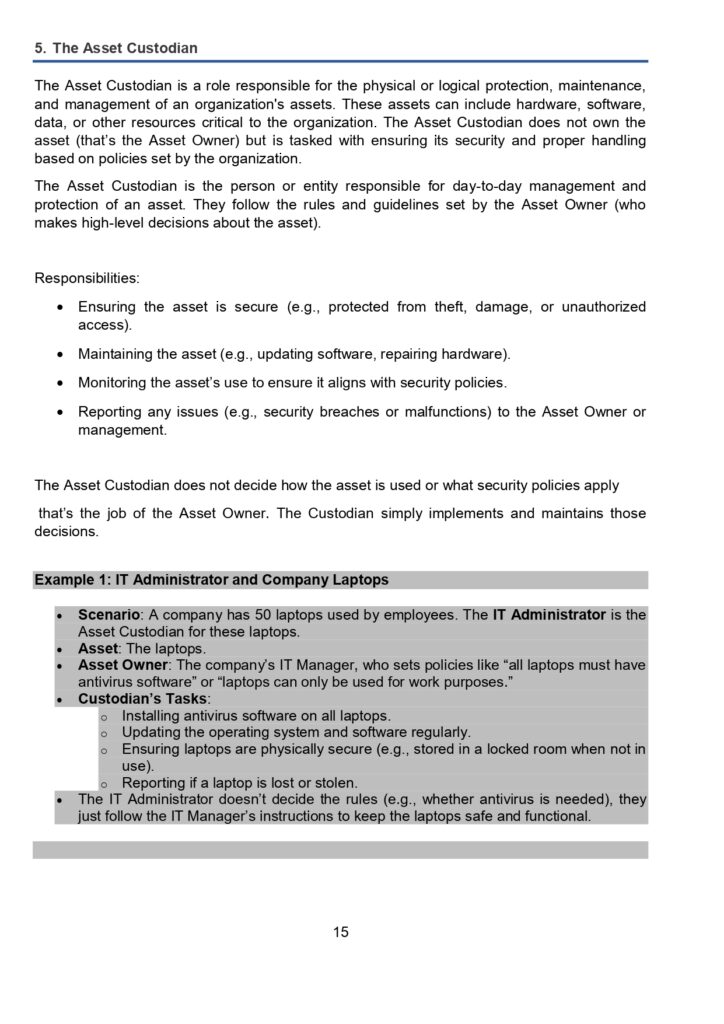
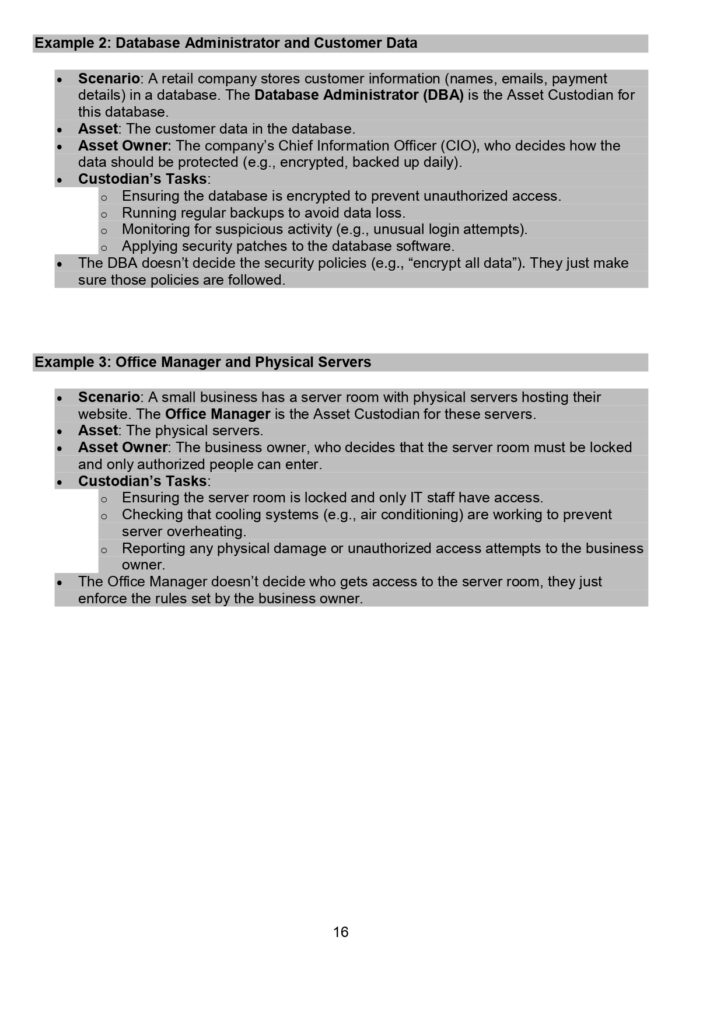
The document focuses on information asset security, the core of CISSP Domain 2 (Asset Security): identifying, owning, classifying and protecting information assets. It also includes a long list of key security terms from access control, authentication, attacks and security operations that appear across the exam.
Table of Contents
Information Assets
1.1 What Are Information Assets
1.2 Types of Information Assets
1.3 How to Protect Information AssetsInformation Asset Policy
2.1 What is an Information Asset Policy
2.2 Key Characteristics of PoliciesHow to Identify Information Assets
The Asset Owner
The Asset Custodian
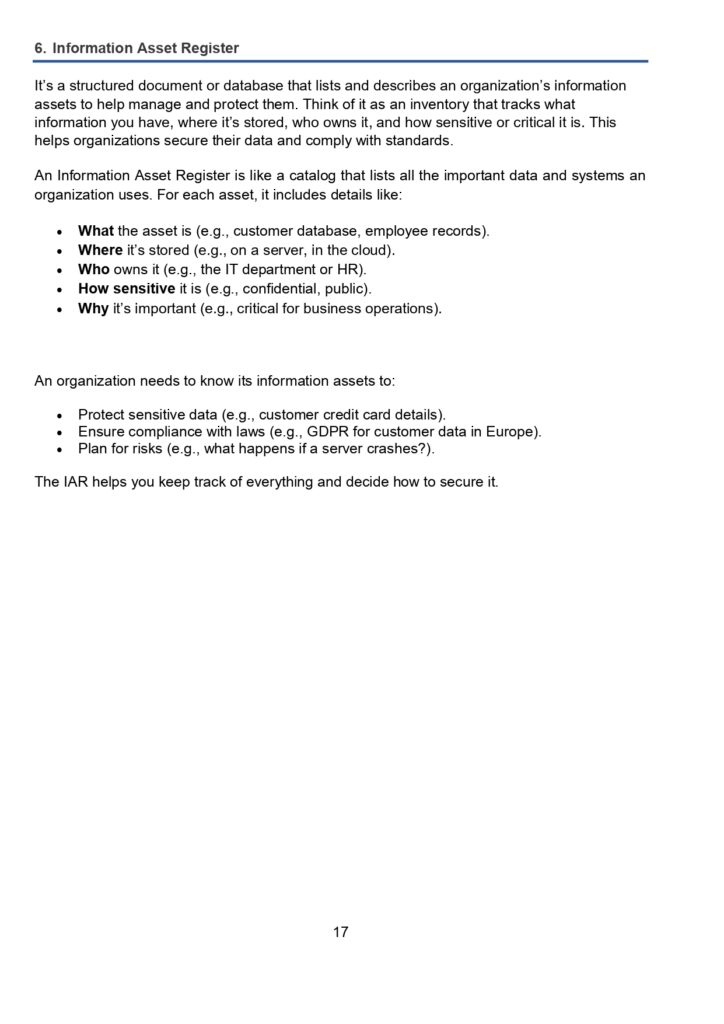
Information Asset Register
Asset Classification
7.1 Classification Policy
7.2 Why is Asset Classification Important
7.3 Steps of Asset Classification
7.4 Military Classification Schemes
7.5 Commercial Classification SchemesData Loss Prevention
Information Asset Management
9.1 Identifying Assets
9.2 Protecting Assets
9.3 Asset Management LifecycleType of Information Assets
10.1 Primary Assets
10.2 Supporting AssetsData Security Control
11.1 Data at Rest
11.2 Data in TransitInformation Security and Asset Protection
12.1 Role-Based Access Control (RBAC)
12.2 Palm Vein Scanner
12.3 Corrective Control
12.4 Detective Control
12.5 Identification
12.6 Technical Control
12.7 LDAP
12.8 SSO System
12.9 Hash
12.10 Dictionary Attack
12.11 Kerberos
12.12 Asymmetric Keys
12.13 Mandatory Access Control (MAC)
12.14 Need to Know
12.15 Discretionary Access Control (DAC)
12.16 TACACS
12.17 Physical Access
12.18 Deterrent Control
12.19 Recovery Control
12.20 Intrusion Detection System
12.21 Least Privilege
12.22 Brute-Force Attacks
12.23 Tempest Equipment
12.24 Promiscuous
12.25 Honeypot
12.26 Man-in-the-Middle (MITM) Attack
12.27 Replay Attack
12.28 Chief Privacy Officer
12.29 Security Administrator
12.30 Mobile Device Management (MDM) Policy
12.31 Data Steward
12.32 Data Processor
12.33 WPA
12.34 Configuration Management Database (CMDB)
12.35 Cloud Access Security Broker (CASB)
12.36 Digital Rights Management (DRM)
12.37 OECD Principle
12.38 Clean Desk Policy
12.39 Thermal Relocking
12.40 NIST SP 800-88
CISSP Asset Security: Key Concepts Explained
Most of this PDF focuses on Asset Security (Domain 2 of the CISSP exam). Below is a quick summary of the concepts it covers, so you can review them before or after reading the full document.
Data Roles: Who Is Responsible for What?
| Role | Responsibility |
|---|---|
| Data / Asset Owner | A senior manager who is ultimately accountable for the asset. Decides its classification and who may access it. |
| Data Custodian | Usually IT staff. Implements the owner’s decisions day to day: backups, access controls, patching. |
| Data Steward | Responsible for data quality and making sure the data is used according to policy. |
| Data Processor | Processes personal data on behalf of the data controller (for example, a cloud or payroll provider). |
| Chief Privacy Officer | Oversees the protection of personal data and compliance with privacy laws. |
Exam tip: the owner is accountable, the custodian is responsible for carrying out the protection. If a question asks who decides the classification, the answer is the owner.
Classification Schemes: Military vs. Commercial
| Military / Government (highest to lowest) | Commercial / Private (highest to lowest) |
|---|---|
| Top Secret | Confidential (or Proprietary) |
| Secret | Private |
| Confidential | Sensitive |
| Sensitive but Unclassified | Public |
| Unclassified |
Classification is based on the value and sensitivity of the data and the impact if it were disclosed, modified or lost. Labels must stay with the data, and access should follow need to know and least privilege.
Protecting Data in Every State
- Data at rest: disk and database encryption, access controls, secure storage of backups.
- Data in transit: TLS, IPsec VPNs, and secure protocols instead of clear-text ones.
- Data in use: access control, DRM, and limiting what users can copy or export.
- Data Loss Prevention (DLP): network DLP inspects traffic leaving the organization, and endpoint DLP controls what users can do with data on their devices.
Secure Data Disposal (NIST SP 800-88)
- Clear: overwrite data so it cannot be recovered with normal tools. Suitable when media is reused inside the organization.
- Purge: techniques such as cryptographic erase or degaussing that protect against laboratory recovery. Suitable before media leaves your control.
- Destroy: shredding, pulverizing or incinerating the media. The only option when the data is highly sensitive and the media will not be reused.
Data remanence (data left behind after deletion) is the reason simple deletion or formatting is never enough. Note that degaussing does not work on SSDs.
Quick Glossary of Terms from the PDF
- CMDB: Configuration Management Database, the central record of IT assets and how they are configured.
- CASB: Cloud Access Security Broker, which sits between users and cloud services to enforce security policy.
- DRM: Digital Rights Management, which controls how content can be used, copied or shared after it is delivered.
- TEMPEST: shielding standards that prevent information leaking through electromagnetic emanations.
- Kerberos: ticket-based authentication protocol used for single sign-on in many enterprise networks.
- MAC vs. DAC vs. RBAC: access decided by labels and clearances (MAC), by the owner (DAC), or by job role (RBAC).
- Clean desk policy: no sensitive documents or unlocked devices left unattended on desks.
Frequently Asked Questions
Which CISSP domain does this PDF cover?
It focuses mainly on Domain 2 (Asset Security): asset identification, ownership, classification, asset management and data security controls. It also includes many key terms from access control and security operations.
How important is Asset Security on the CISSP exam?
It is one of the smaller domains by weight, but its ideas (ownership, classification, data states, secure disposal) appear in questions across the whole exam, so it is worth mastering early.
What should I study with this PDF?
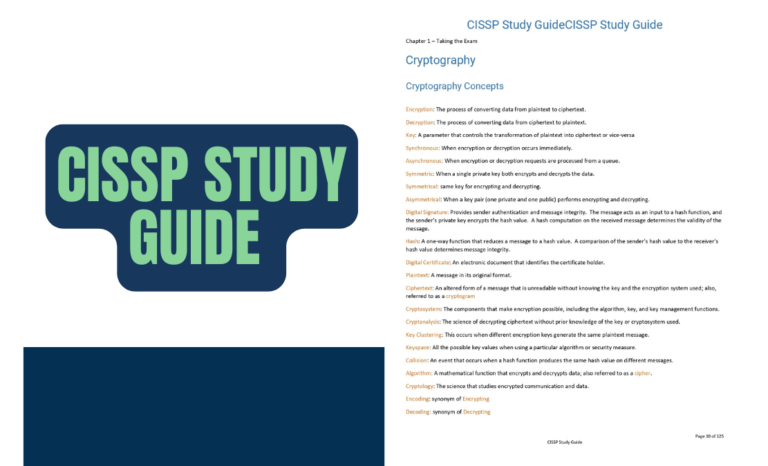
Pair it with a full-domain resource such as the CISSP Study Guide PDF and review everything at the end with the CISSP Cheat Sheet Series.
Why the Document
This PDF is invaluable for several reasons. Firstly, it’s conveniently structured to allow for focused study sessions. Secondly, it empowers candidates with the necessary tools to assess their knowledge and identify areas that need improvement. Lastly, it explains the asset security concepts that many candidates find dry or confusing in a short, practical format.
Conclusion
Preparing for the CISSP exam can be overwhelming, but with the right resources, it becomes manageable. Our CISSP exam preparation PDF has been created to simplify your study journey and boost your confidence. Remember, achieving CISSP certification is not just about passing an exam; it’s about gaining the knowledge to protect information systems effectively.
Download from Below Link
Ready to start your journey towards CISSP certification? Download the CISSP exam preparation PDF by clicking Here and take a significant step toward your professional growth.
Related Free Cybersecurity Resources
- CISSP Cheat Sheet Series (PDF)
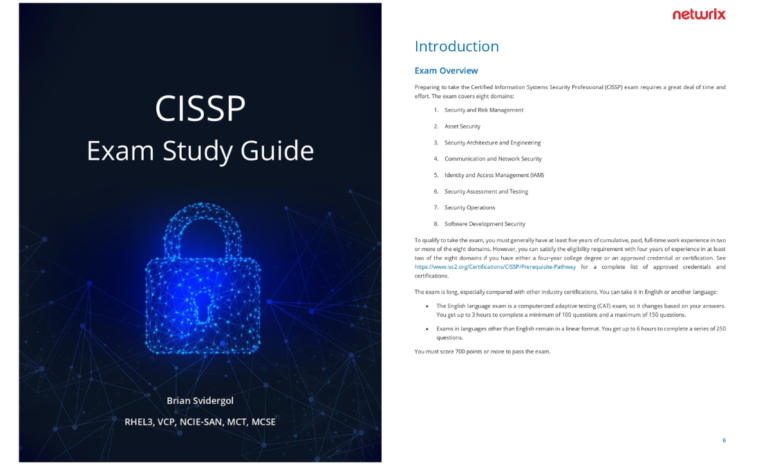
- CISSP Exam Study Guide PDF
- CISSP Study Guide PDF
- CISSP Concepts Guide (PDF)
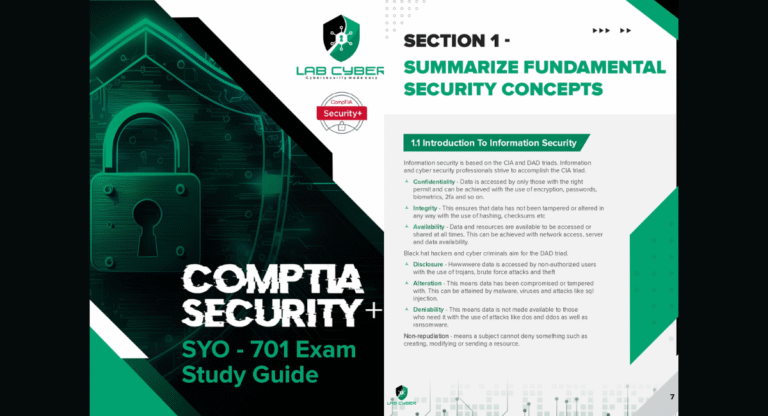
- CompTIA Security+ Notes PDF
- Top 27 Real-World Use Cases for Penetration Testers – Download PDF